A Complete Guide to Accessible Parking Requirements in Public Facilities
Accessible parking is an essential part of creating inclusive public spaces. For many individuals with disabilities or mobility challenges, accessible parking spaces make it possible to safely enter and use public facilities. When parking areas are properly designed, they reduce barriers and allow people to move independently from their vehicles to building entrances.
Across Canada, accessibility regulations help guide how public facilities should provide accessible parking.
Laws such as the Accessibility for Ontarians with Disabilities Act (AODA) and the federal Accessible Canada Act (ACA) promote barrier-free environments by encouraging organizations to identify and remove accessibility barriers. Accessible parking requirements play an important role in achieving this goal.
Accessibility Partners works with organizations across Canada to help them understand accessibility standards and improve compliance. By ensuring parking areas meet accessibility expectations, businesses and public facilities can create safer and more inclusive environments for visitors, employees, and customers.
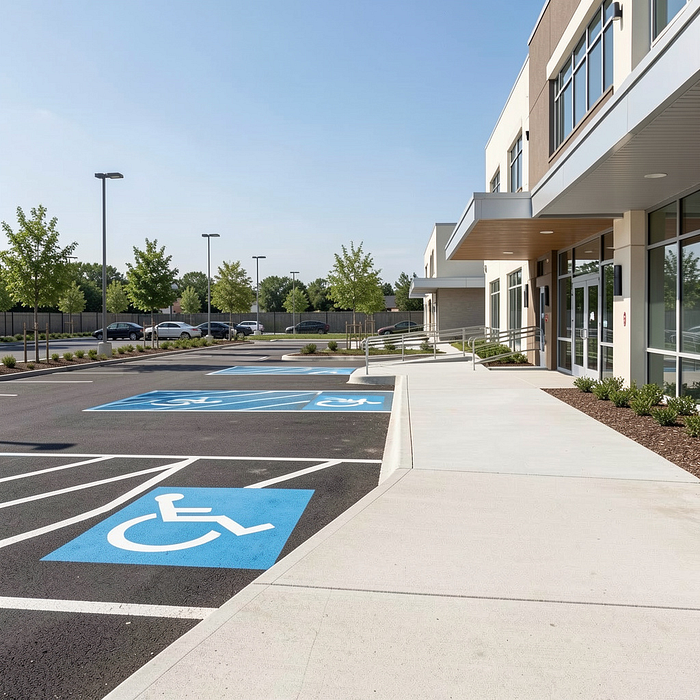
Understanding Accessible Parking Requirements
Key Elements of Accessible Parking Design
Number of Accessible Parking Spaces
Accessibility standards typically require facilities to provide a minimum number of accessible parking spaces based on the total number of parking spots available. Larger parking areas must include more accessible spaces to ensure people with disabilities can find parking when visiting a facility.
Providing the correct number of spaces helps support equitable access and ensures that accessible parking remains available when needed.
Proper Dimensions and Access Aisles
Accessible parking spaces are wider than standard parking spaces. The extra width allows individuals using wheelchairs, walkers, or other mobility devices to safely enter and exit their vehicles.
Many accessible parking spaces also include an adjacent access aisle, which provides additional room for maneuvering mobility equipment. These aisles are a key design element that helps make parking areas functional and safe for individuals with mobility limitations.
Clear Signage and Markings
Accessible parking spaces must be clearly identified through visible signage and pavement markings. Most spaces display the International Symbol of Accessibility, helping drivers easily recognize designated parking areas.
Clear markings help prevent misuse of accessible spaces and ensure they remain available for individuals who require them.
Accessible Pathways to Building Entrances
Accessible parking spaces should be located as close as possible to accessible building entrances. In addition to proximity, these spaces must connect to a safe and unobstructed pathway that leads directly to the entrance.
Providing a continuous accessible route ensures individuals with disabilities can travel safely from their parking space to the building without encountering unnecessary barriers.
Why Accessible Parking Compliance Matters
Meeting accessible parking requirements benefits both organizations and the communities they serve. Accessible parking supports independence for individuals with disabilities and helps ensure equal access to public spaces.
Organizations that prioritize accessibility also demonstrate their commitment to inclusion and social responsibility. In many cases, accessibility improvements can enhance the overall usability of a facility for all visitors.
Accessibility Partners helps Canadian organizations evaluate accessibility barriers, assess compliance, and implement practical improvements that align with Canadian accessibility standards.
Conclusion
Accessible parking is a fundamental part of creating inclusive and welcoming public environments. When parking areas are designed according to accessibility standards, they allow individuals with disabilities to access buildings safely and independently.
By understanding accessible parking requirements and taking steps to implement barrier-free design, property owners and facility managers can support greater accessibility across their facilities. With the right planning and guidance, organizations can create spaces that are accessible to everyone.


Comments
Post a Comment